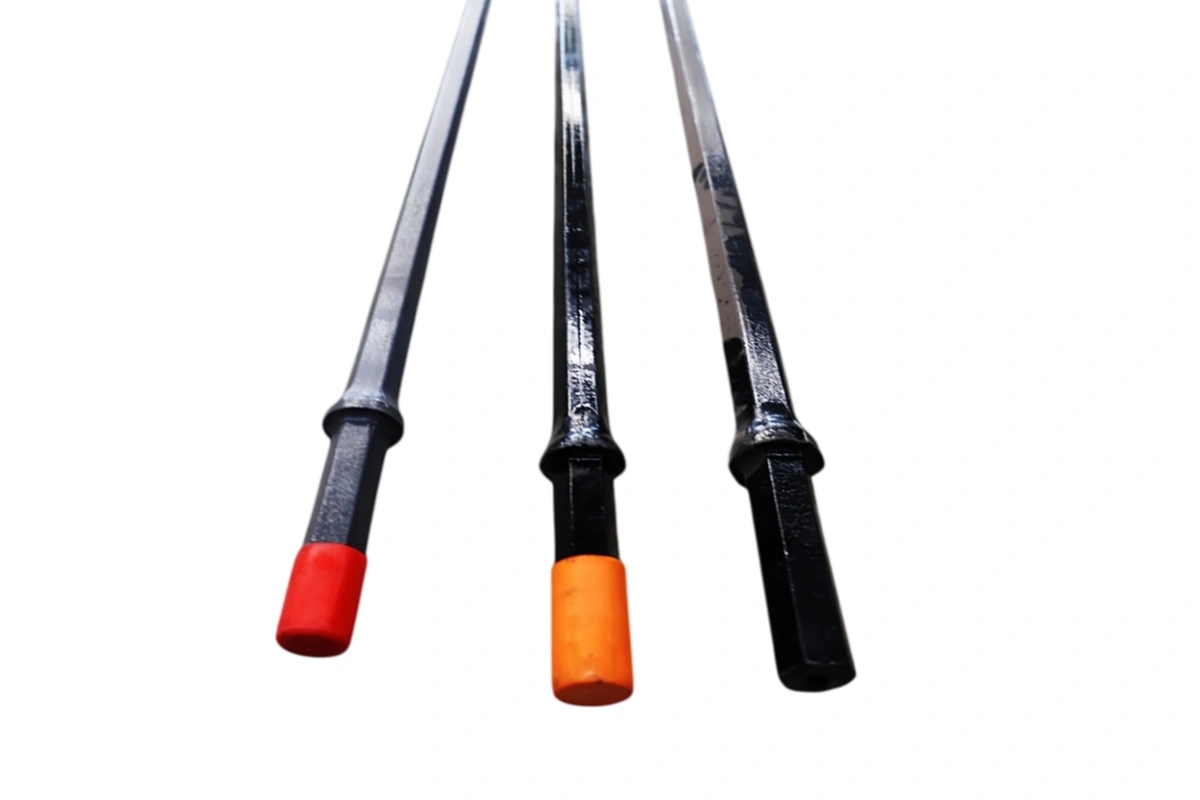
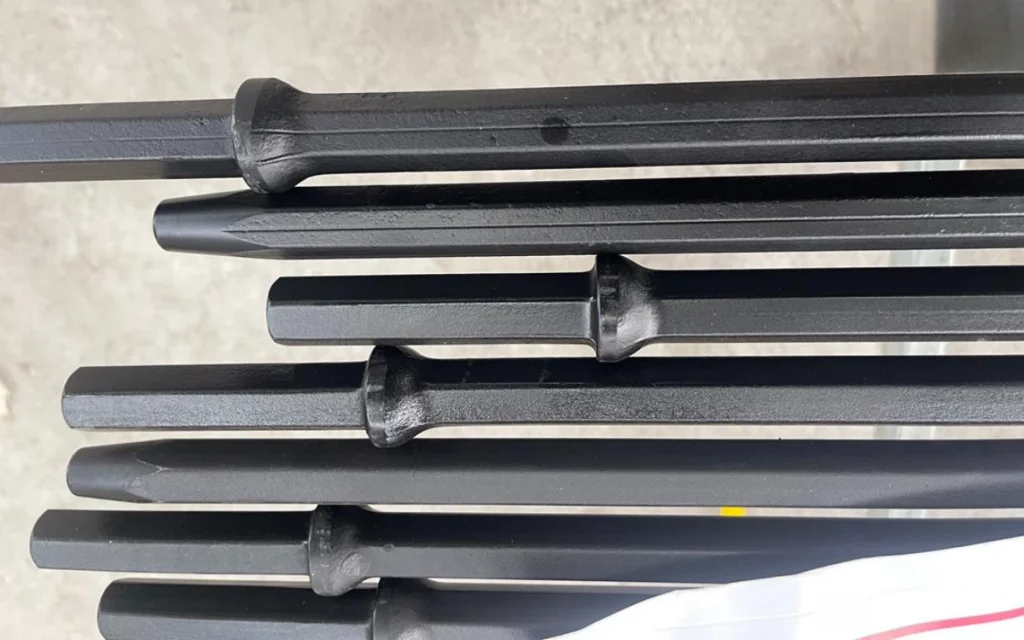
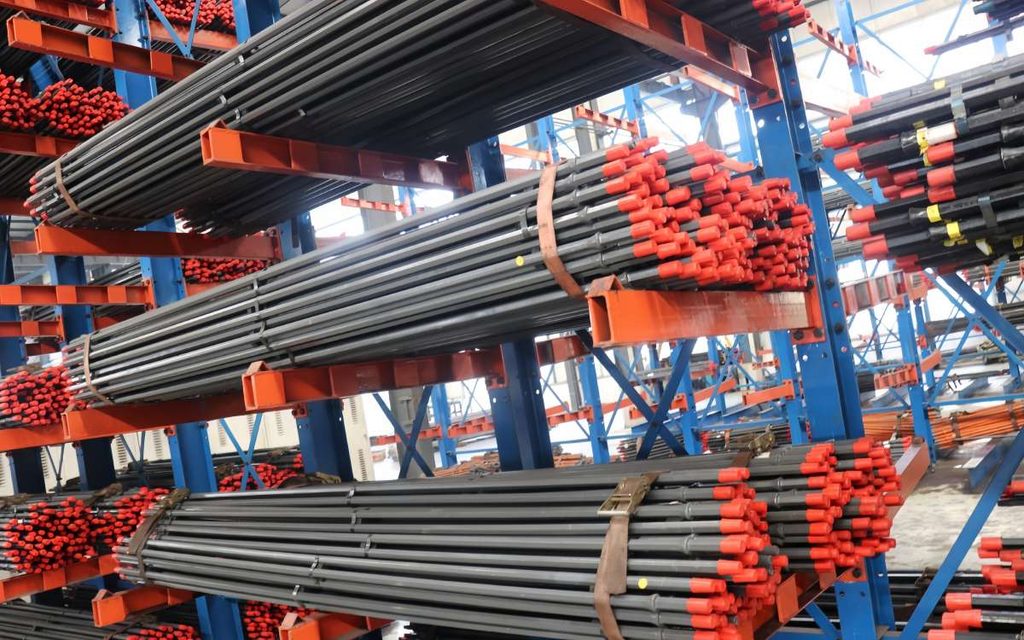
Tapered Drill Rod Sizes: Complete Guide to Hex 22, Hex 25, 7°, 11° and 12°
Тanya
Table of Contents
Tapered drill rod sizes must be selected by four matching points: the rock drill shank, rod body size, taper angle and practical rod length. A 2,000 mm rod is not automatically suitable just because the target hole is about two metres deep. The rod must also fit the rock drill at the shank end and the tapered drill bit at the opposite end.
That is where many wrong orders begin. A buyer sends only “22 × 108 mm” or “need a 3 m rod,” but the supplier still does not know whether the required body is Hex 22 or Hex 25, whether the connection is 7°, 11° or 12°, or whether the available working space can handle the requested length.
This guide turns those measurements into a practical selection process. It explains how to read a tapered drill rod length chart, how to distinguish rod body size from taper angle, and which photos and job details prevent a costly mismatch.
Direct answer: Identify the rock drill and shank first, match the rod body second, match the taper to the bit third, and choose the length last. Never select a tapered rod by length alone.
Tapered Drill Rod Sizes at a Glance
The following table summarizes the verified product groups currently listed by Good Drill. Treat it as an initial filter rather than a universal compatibility chart.
Rod body
Product group
Taper
Published length range
Confirm before ordering
Hex 22 mm
Standard tapered rod
7°
600–6,000 mm
Rock drill shank, bit socket and working length
Hex 25 mm
Standard tapered rod
7°
4,000–6,000 mm
Hex size, machine capacity, space and handling
Hex 22 mm
Carburized tapered rod
11°
610–8,000 mm
Matching 11° bit and operating conditions
Hex 22 mm
Carburized tapered rod
12°
610–8,000 mm
Matching 12° bit and operating conditions
Hex 25 mm
Carburized tapered rod
12°
1,830–6,095 mm overall published range
Individual length, shank and 12° bit compatibility
The table shows why “What length do you need?” is not enough. The same nominal length may be offered with different rod bodies or taper connections. Conversely, two rods with the same taper may not fit the same rock drill if their shank ends or body sizes differ.
Important data note: the current Hex 25 mm, 12° source table contains inconsistent metric-to-foot pairings in several individual rows. The overall published metric range is shown above, but each detailed Hex 25 mm, 12° size should be confirmed against the latest factory specification before quotation or publication.
Understand the Four Dimensions Behind Tapered Drill Rod Sizes
A complete size description has more than one number. To compare tapered drill rod sizes correctly, separate these four dimensions.
1. Rock Drill Shank Requirement
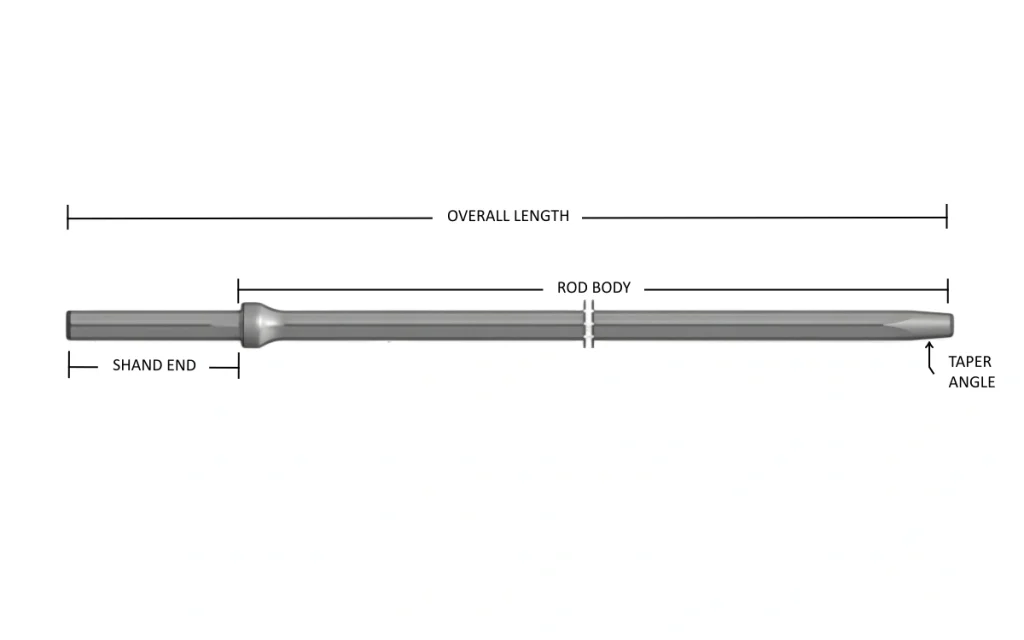
The shank end is the part retained and driven by the rock drill. It must match the machine’s chuck, retainer and rotation system. A familiar example is the H22 × 108 mm shank used by several YT-series and handheld pneumatic rock drills, but the exact requirement must still be checked against the rock drill model.
Do not identify the shank from the rod body alone. Ask for:
the rock drill brand and complete model;
a photo of the current rod’s shank end;
the shank length and across-flats measurement;
any marking on the old rod;
the machine manual or existing part number, if available.
The rock drill decides what it can hold. The bit diameter does not determine the shank.
2. Rod Body: Hex 22 or Hex 25
“Hex 22” and “Hex 25” describe the nominal hexagonal rod body across flats. They are not names for the taper angle.
A Hex 25 rod has a larger body than a Hex 22 rod, but that does not automatically make it the correct upgrade. Changing body size may also affect the shank fit, machine compatibility, rod weight, handling and the available bit system. A larger rod that cannot be properly retained by the rock drill is not an improvement.
Use a calliper across two opposite flat faces. Do not measure corner to corner, because that produces a larger number and can lead to a wrong identification.
Sucre WhatsApp: +8613920388202
3. Taper Connection: 7°, 11° or 12°
The tapered end connects the rod to the bit. The angle controls the contact between the rod nose and the bit socket.
A 7° rod requires a matching 7° bit. The same rule applies to 11° and 12° systems. A bit that can be pushed onto the rod is not necessarily making full contact. If the angles differ, impact may be concentrated on a limited contact area instead of being distributed across the intended tapered surface.
Possible consequences include:
the bit loosening during drilling;
abnormal marks on the rod nose;
premature wear or cracking;
difficult bit removal;
unstable energy transfer;
damage to both rod and bit.
Manufacturer working ranges also differ. For example, Epiroc’s tapered drill-string data lists different applications and operating ranges for 4°46′, 7°, 11° and 12° systems. This is useful evidence that taper angle is part of a complete drilling system—not a universal “soft rock versus hard rock” grade.
4. Rod Length
Rod length affects reach, handling, straightness, weight and the space needed to position the rock drill. It should be selected after the first three dimensions are confirmed.
A longer rod may reduce the need to stop and change tools, but it can also be harder to control in confined headings or on uneven quarry benches. A shorter starter rod can be more practical where collaring accuracy and limited working space matter.
Also distinguish:
overall rod length from the supplier’s table;
effective drilling depth, which is reduced by the portions retained in the machine and bit;
available setup space, which must accommodate the machine and rod before drilling starts.
Compare Hex 22 and Hex 25 Tapered Drill Rods
When comparing tapered drill rod sizes, the correct question is not “Which hex size is stronger?” It is “Which hex size matches the machine and the existing drilling system?”
Selection factor
Hex 22 mm
Hex 25 mm
Body identification
About 22 mm across opposite flats
About 25 mm across opposite flats
First check
Rock drill shank and retainer
Rock drill shank and retainer
Current Good Drill groups
7°, 11° and 12° listed
7° and 12° listed
Published length coverage
Includes short and long listed sizes, depending on group
Current page mainly lists longer sizes
Common buying risk
Confusing taper angle with shank size
Assuming a larger body fits the existing drill
Choose Hex 22 when the rock drill, shank and matching bit system require it. Choose Hex 25 only when the equipment and complete drill string are designed for that body and shank arrangement.
If an old rod is available, send one clear photo with a calliper across the flats. That single image is more useful than a message saying “large rod” or “standard rod.”
Compare 7°, 11° and 12° Tapered Drill Rods
Across all tapered drill rod sizes, taper angle should be treated as a compatibility requirement first and an application variable second.
7° Tapered Drill Rod
The current Good Drill range lists standard 7° rods in Hex 22 and Hex 25 groups. The Hex 22 group contains the broadest number of individual lengths on the page.
A 7° rod is the correct choice when all three conditions are met:
the rock drill accepts the rod’s shank;
the rod body suits the machine and job;
the bit has a matching 7° socket.
Do not replace a 7° rod with an 11° rod only because the available lengths look similar.
11° Tapered Drill Rod
The current product range lists an 11° carburized group with a Hex 22 body. It must be paired with an 11° tapered bit.
An 11° system may appear in demanding handheld or quarry drilling arrangements, but this does not mean every hard-rock job should automatically change to 11°. Keep the existing matched system unless the rock drill, bit range and operating requirements justify a change.
12° Tapered Drill Rod
The current range lists 12° carburized rods in Hex 22 and Hex 25 groups. A 12° rod must use a matching 12° bit socket and a compatible shank end.
The angle alone does not define the complete product. A purchasing description should still include body size, length and shank requirement.
Can the Three Angles Be Interchanged?
No. Similar length and body size do not make 7°, 11° and 12° connections interchangeable. If the marking is unreadable, do not guess from a distant photo. Photograph the complete rod, tapered nose, bit socket and any surviving markings, then provide measurements.
Tapered Drill Rod Length Chart
The tapered drill rod sizes below reproduce verified metric lengths currently published for the main product groups. Availability should be confirmed before ordering because stock and production status may change.
This group covers short, intermediate and long listed sizes. That variety does not mean every length is appropriate for every handheld or air-leg drill. Confirm the machine, drilling direction and setup space.
Hex 25 mm, 7° Standard Rod Lengths
Available metric lengths
4,000, 4,700, 5,000, 5,500 and 6,000 mm
These are comparatively long listed sizes. Before selecting one, check machine capacity, handling method, collaring stability and working clearance.
Hex 22 mm, 11° Carburized Rod Lengths
Available metric lengths
610, 1,220, 1,830, 2,000, 2,435, 2,600, 3,200, 3,655, 4,000, 4,800, 5,600, 6,400, 7,200 and 8,000 mm
Each size in this group requires an 11° tapered bit and a compatible rock drill shank.
Hex 22 mm, 12° Carburized Rod Lengths
Available metric lengths
610, 1,220, 1,830, 2,000, 2,435, 2,600, 3,200, 3,655, 4,000, 4,800, 5,600, 6,400, 7,200 and 8,000 mm
Although this list currently mirrors the published 11° metric lengths, the two groups are not interchangeable because their taper angles differ.
Hex 25 mm, 12° Carburized Rod Range
The current product page publishes an overall metric range of 1,830–6,095 mm. Several individual rows contain conflicting metric-to-foot pairings, so the precise size list should be confirmed against the latest technical sheet before it is included in an RFQ or purchase order.
This is an important procurement rule: when two units in the same table disagree, confirm the source data rather than choosing whichever number looks familiar.
Choose Tapered Drill Rod Sizes in Five Steps
Step 1: Identify the Rock Drill
Record the exact brand and model. “Pneumatic rock drill” is too broad because different machines can use different shanks, power levels and retainers.
For replacement orders, include a photo of the machine nameplate and the existing rod shank. Good Drill’s current pneumatic rock drill range lists several air-leg and handheld models with H22 × 108 mm shanks, but the actual machine on site remains the deciding evidence.
Step 2: Measure the Rod Body Correctly
Use a calliper across two opposite flats:
about 22 mm indicates the Hex 22 body group;
about 25 mm indicates the Hex 25 body group.
Do not measure across opposite corners. Clean dirt and burrs before measuring, and repeat the measurement away from heavily worn areas.
Step 3: Confirm the Taper Angle and Matching Bit
Check markings on the rod and bit. Confirm whether both are 7°, 11° or 12°.
If the marking is missing, send the supplier:
a side view of the tapered nose;
a clear photo inside the bit socket;
taper dimensions taken with a calliper;
the old rod and bit together;
the rock drill model.
The matching tapered drill bit must use the same connection angle. Bit diameter is selected for the required hole, but it does not replace the taper check.
Step 4: Select a Practical Length
Answer these questions before choosing from the chart:
What is the required finished hole depth?
How much space is available behind the drill?
Is drilling horizontal, downward, upward or inclined?
Will the operator collar the hole with the same rod?
Can the selected machine rotate, retain and control the rod?
How will long rods be transported and handled on site?
The longest available rod is not automatically the most productive. A practical length should support stable setup, manageable handling and the required reach.
Step 5: Compare the Complete System and Cost per Metre
Tapered drill rod sizes should be evaluated with the rock drill and bit, not as isolated steel bars. During a field trial, record:
metres drilled per rod;
penetration rate;
bending or breakage;
taper wear and bit retention;
downtime for changes;
damage to connected components.
The useful cost measure is:Rod cost per metre=metres drilledrod purchase cost+related downtime and damage cost
Do not insert an assumed service-life figure. Use results from the actual rock, machine, operator and settings.
Standard vs Carburized Tapered Drill Rods
The current Good Drill table separates standard and carburized tapered drill rod sizes. “Carburized” identifies a surface-treatment category, but it does not by itself prove a specific hardness, case depth or service-life multiplier.
Those values are not published on the current product page, so they should not be invented in a Blog or quotation.
When asking whether a standard or carburized series is more suitable, provide:
rock type and abrasiveness;
drilling frequency;
rock drill model;
rod body, taper and length;
current wear or failure pattern;
expected order quantity.
A treatment option must also exist in the required size combination. Do not assume every Hex size, taper and length is available in both standard and carburized versions.
Match the Rock Drill, Rod and Bit as One System
Use this compatibility chain before confirming tapered drill rod sizes:
Rock drill → shank requirement → rod body → taper angle → bit socket → bit diameter
A correct bit diameter cannot compensate for a wrong taper. A correct taper cannot compensate for a wrong rock drill shank. Every connection must be checked in sequence.
Component
Main question
Evidence to provide
Rock drill
What machine drives the rod?
Brand, model and nameplate photo
Shank
What does the chuck retain?
Shank dimensions and end photo
Rod body
Hex 22 or Hex 25?
Across-flats calliper photo
Taper
7°, 11° or 12°?
Marking, dimensions and bit socket photo
Bit
What hole is required?
Diameter, face/button type and old bit photo
Job
Can the setup work safely and efficiently?
Hole depth, direction, rock and working space
This approach is especially useful when replacing an unmarked rod. It converts a vague request into a traceable selection.
Avoid These Seven Tapered Drill Rod Selection Mistakes
1. Ordering by Length Alone
“Three metres” describes only one dimension. It does not identify the body, taper or shank.
2. Confusing Hex Size with Shank Size
Hex 22 or Hex 25 describes the rod body group. The shank also needs its own dimensions and machine compatibility check.
3. Measuring Across Corners
A hexagonal rod must be measured across opposite flats. A corner-to-corner measurement will be larger and can misidentify the rod.
4. Mixing 7°, 11° and 12° Components
A near fit is not a correct fit. Match the rod taper to the bit socket.
5. Treating Rod Length as Hole Depth
Part of the rod remains in the machine and bit. Setup geometry and collaring also affect the effective drilling depth.
6. Choosing the Largest Rod Available
A larger or longer rod may not fit the rock drill or the working area. Match the existing system unless a complete change has been technically reviewed.
7. Comparing Price Without Recording Metres Drilled
A lower purchase price can still produce a higher cost per metre if the rod bends, wears early or damages matching components.
Send This Job Card for an Accurate Recommendation
Copy and complete the following information when requesting tapered drill rod sizes, a model recommendation or a quotation:
Required information
Your answer
Rock drill brand and model
Current shank size
Rod body
Hex 22 / Hex 25 / unknown
Taper angle
7° / 11° / 12° / unknown
Required rod length
Bit diameter and type
Hole diameter and depth
Drilling direction
Rock type and condition
Current problem
Wear / bending / breakage / loose bit / other
Trial and regular quantity
Destination country or port
If the size is unknown, attach five photos: the complete rod, shank end, tapered end, bit socket and calliper measurement across the rod flats.
CTA: Not sure which tapered drill rod size fits your machine? Send the rock drill model, old rod photos, taper marking, required length and hole conditions. Good Drill can check compatibility before preparing a quotation.
Button:Check My Tapered Drill Rod Size
Tapered Drill Rod Sizes FAQs
What Information Defines Tapered Drill Rod Sizes?
Tapered drill rod sizes normally include the rock drill shank, rod body such as Hex 22 or Hex 25, taper angle such as 7°, 11° or 12°, and overall rod length. A length alone is not enough to identify a compatible rod.
How Do I Measure a Hex 22 Tapered Drill Rod?
Clean the rod and place a calliper across two opposite flat faces of the hexagonal body. A reading near 22 mm indicates the Hex 22 body group. Do not measure corner to corner, and separately confirm the shank and taper.
Can a 7° Bit Fit an 11° Tapered Drill Rod?
No. The bit socket and rod taper should use the same angle. A mismatched connection may have incomplete contact, loosen during drilling or damage the rod and bit.
Is Tapered Drill Rod Length the Same as Hole Depth?
No. The published rod length is the overall tool length. Effective hole depth also depends on how much of the rod is retained by the machine and bit, the drilling setup and collaring conditions.
Should I Choose Hex 25 Instead of Hex 22 for Hard Rock?
Not from rock hardness alone. First confirm which rod body and shank the rock drill is designed to use. Then match the taper, bit and operating conditions. Changing to Hex 25 may require a different complete system.
What Is the Difference Between Standard and Carburized Rods?
They are different product-treatment categories. The practical choice depends on available size combinations and the operating conditions. Ask for verified hardness or treatment specifications if they are required; do not infer them from the word “carburized” alone.
Why Does a Tapered Drill Rod Bend or Break?
Possible causes include mismatch, excessive feed, poor collaring, misalignment, worn connections, unsuitable length, material defects or difficult ground. A reliable diagnosis needs photos of the failure, fracture location, machine model, settings and metres drilled.
What Should I Send If My Old Rod Has No Marking?
Send photos of the complete rod, both ends, the matching bit socket and the rock drill nameplate. Include calliper measurements across the flats and key connection dimensions. This is safer than guessing from length or hole diameter.
Select the System Before Selecting the Length
Tapered drill rod sizes are best understood as a chain of matching dimensions. Start with the rock drill, identify the shank, measure Hex 22 or Hex 25 across the flats, confirm 7°, 11° or 12° at the bit connection, and only then choose a practical length.
This order avoids the most common purchasing error: selecting a rod that reaches the desired depth but does not match the machine or bit. It also makes tapered drill rod sizes and quotations easier to compare because every supplier is responding to the same job card.