
Quick Answer: Which Taper Do You Need?
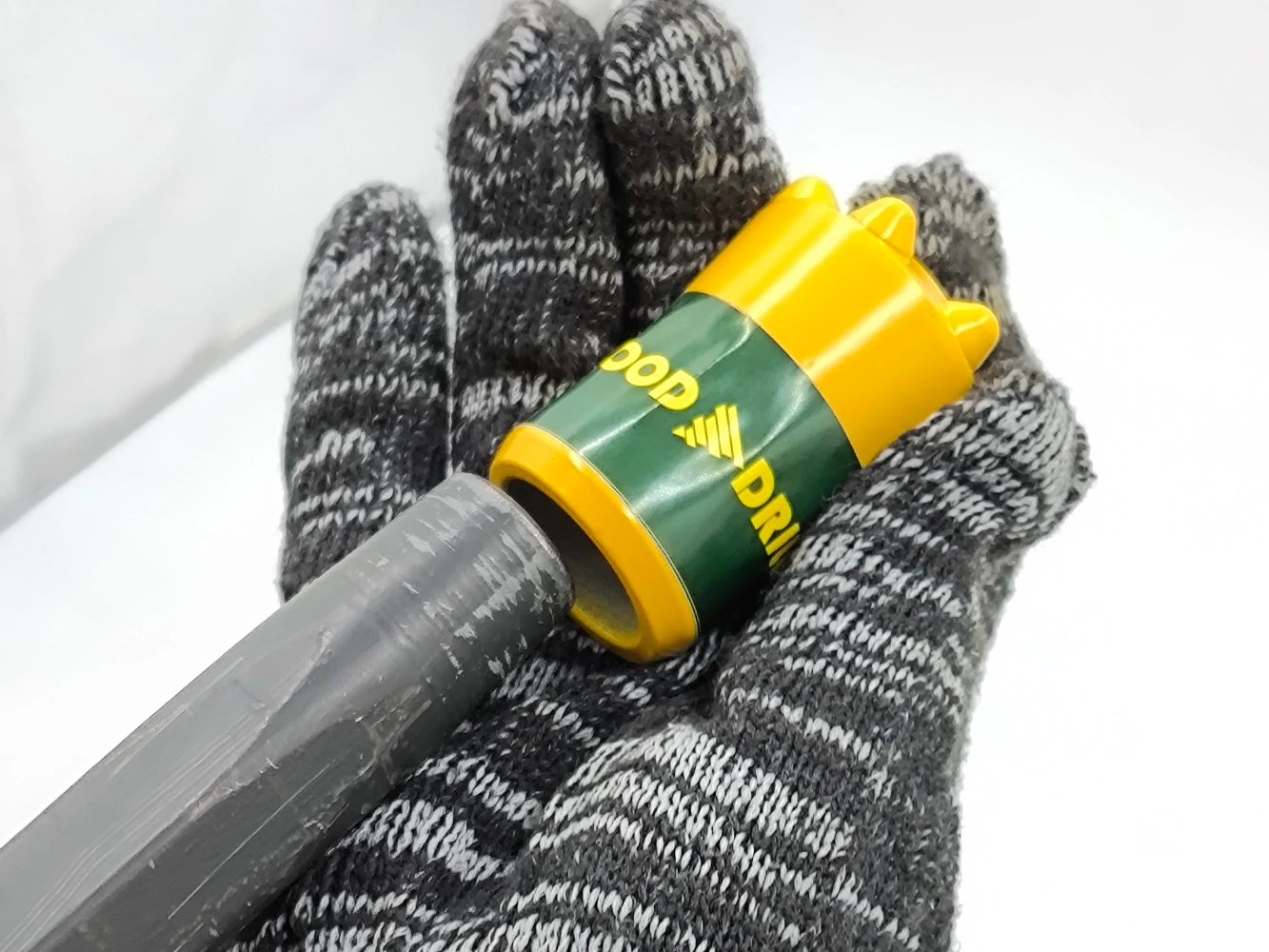
It depends on the taper of your drill rod. A tapered button bit joins a tapered drill rod through a friction (self-locking) fit, and that fit only works when the bit’s socket angle matches the rod’s taper end exactly. Most of the world uses 7°, 11° or 12°; a few equipment families still run 4°46′ or 6° (Lightech Tools).
A 7° bit will not work on an 11° rod, and an 11° bit will not work on a 12° rod. Mixing them causes energy loss, slower penetration, and — in the worst case — a stuck bit or a snapped taper end (RockHound).
Identify your rod’s taper angle first, then buy the matching bit.
What Is a Tapered Button Bit?
What Is a Tapered Button Bit?
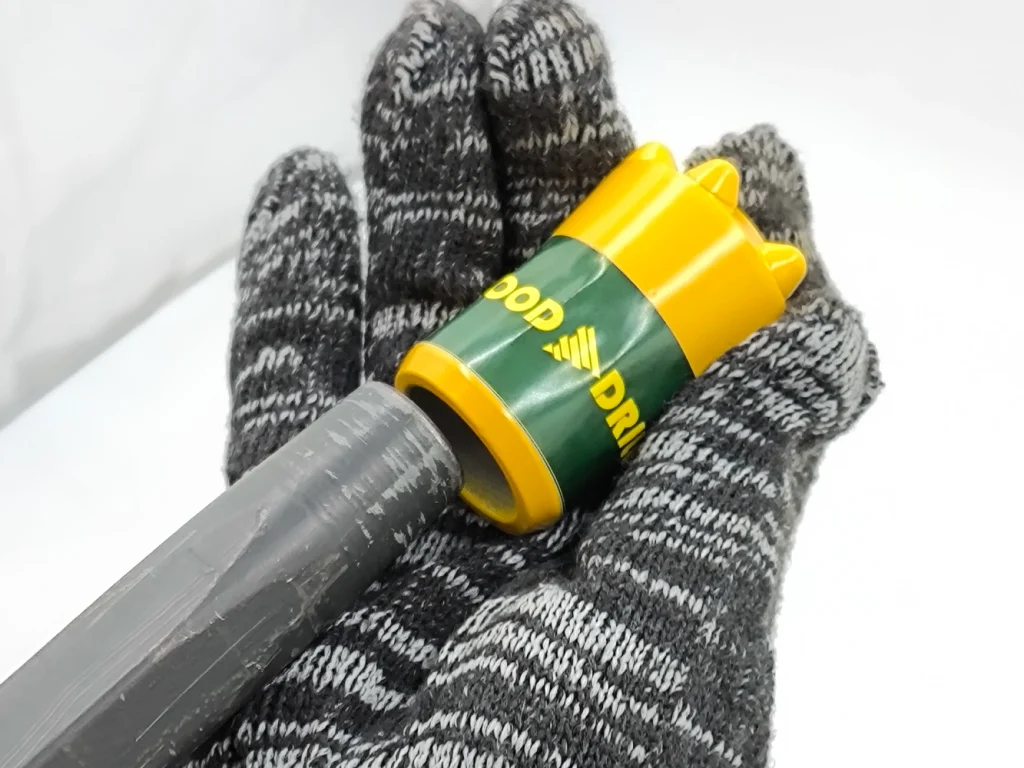
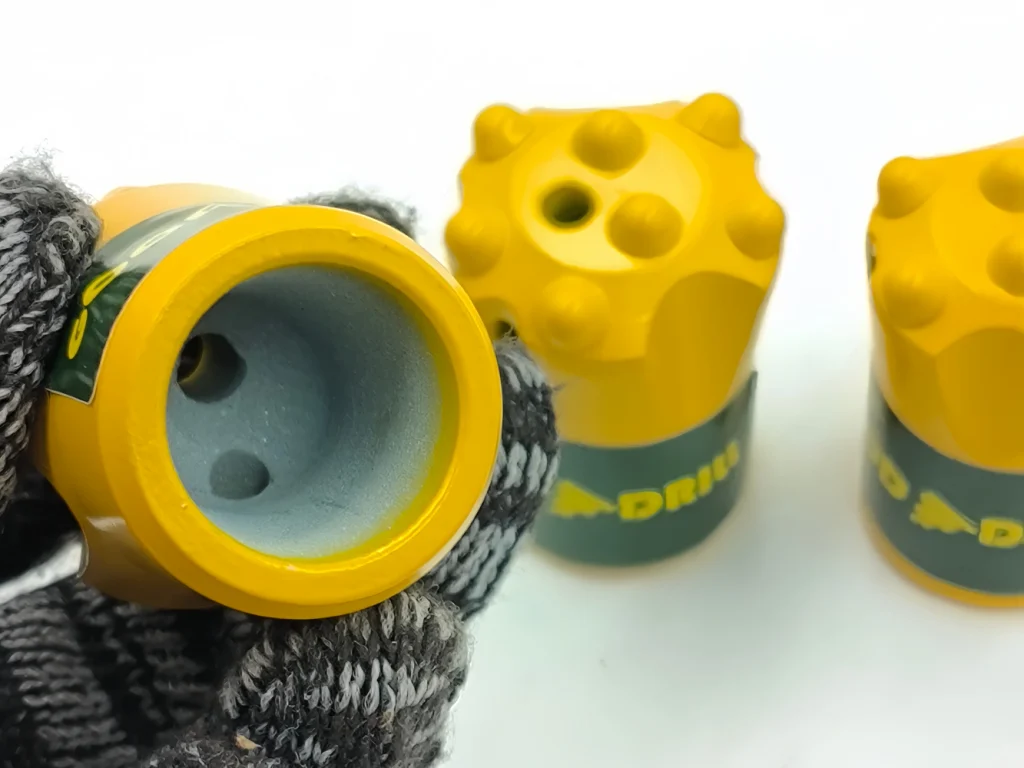
A tapered button bit — also called a taper button bit — is a rock-breaking tool that connects tightly to the drill rod through a matched taper, most commonly 7°, 11° or 12°, and delivers the rock drill‘s impact energy into the rock. It is one of the two main families of rock drill bits, alongside the threaded button bit.
It is widely used in mining, tunneling and mine roadway excavation, slope stabilization, and construction anchoring.
The bit head is set with cylindrical tungsten carbide buttons — a layout that gives efficient cuttings removal, high wear resistance and a low risk of bit jamming, and suits medium-hard to hard rock. Button shape and count, carbide grade and bit diameter can all be adjusted, so one bit family can be configured for distributors, importers and mining end users with different drilling conditions.
Because the joint is friction rather than thread, the bit is the consumable and the rod is the asset: when the buttons wear, the bit comes off with a breakout tool and the rod goes straight back into service (DMiningWell).
7° vs 11° vs 12° Taper: What Actually Differs
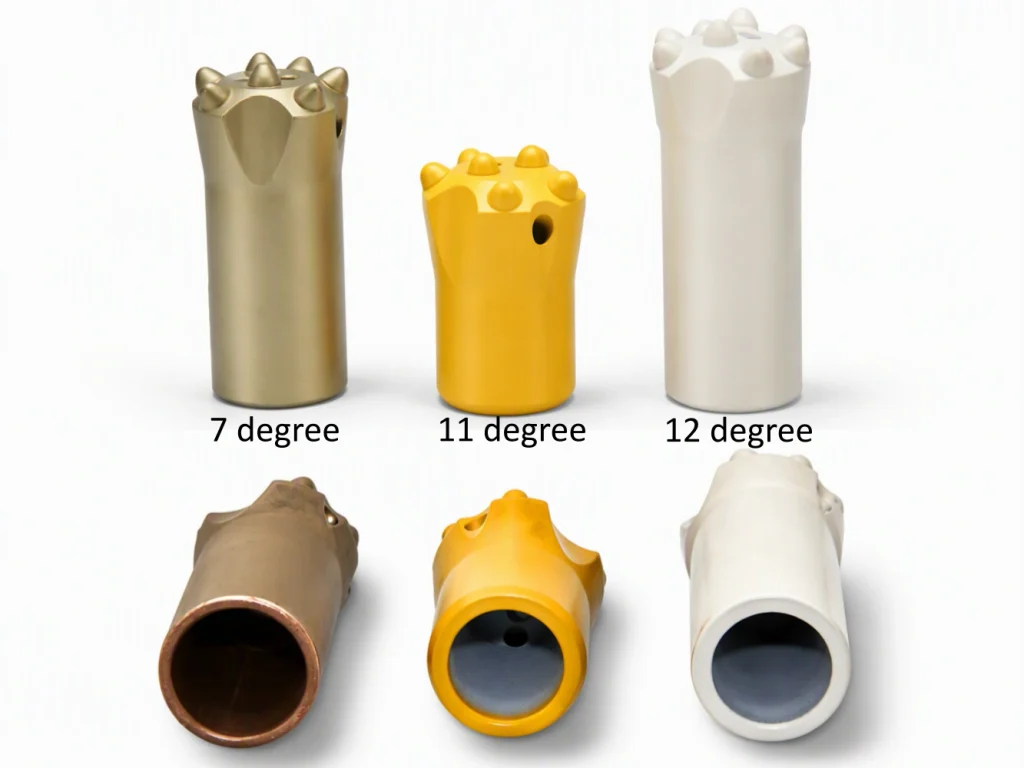
Five taper standards are in common industrial use: 4°46′, 6°, 7°, 11° and 12°. Of these, 7°, 11° and 12° cover almost all mining and civil engineering demand in China; 4°46′ survives mainly in dimension-stone work, and 6° is a low-volume transitional size on export packages. None of them interchange — rod and bit must match.
The angle changes how the joint behaves, not the hole it drills. A shallower taper wedges tighter, holds better and loses less impact energy at the joint, but is harder to break out. A steeper taper changes bits faster and resists seizing in dense hard rock, but grips less.
| Taper | Locking force | Breakout difficulty | Energy transfer | Compatible rods | Typical use |
|---|---|---|---|---|---|
| 4°46′ | Strongest | Very hard | Highest | H19, H22 | Soft rock, very shallow holes, dimension stone |
| 6° | Strong | Hard | High | H19, H22 | Soft rock, scattered shallow work |
| 7° | Strong | Moderate–hard | High | H22, H25 | Medium-hard rock, general engineering, air-leg drills |
| 11° | Moderate | Moderate | High | H22–H32 | Medium to hard rock, general mining and construction |
| 12° | Moderate–weak | Easy | Good | H25–H32 | Hard rock, deep holes, heavy drilling equipment |
7° Taper: Best Grip in Fractured Ground
The strongest lock of the three mainstream sizes and the best resistance to bit loss — which is why it holds in fractured and soft rock where a bit can work loose. The trade-off is breakout effort: after long runs in hard rock the bit can seize and needs a knockout tool. Standard on H22 and H25 rods and on YT28 / YT24 air-leg drills, for medium-hard rock and holes up to about 3 m. It is the highest-volume taper in China and the traditional British and Commonwealth standard.
11° Taper: The Balanced General-Purpose Standard
Locking force is still enough for hard rock, breakout stays practical, and energy transfer is strong — it covers most work without a compromise at either end. Runs on H22, H25 and H32 rods with medium-power pneumatic drills and light rigs; typical work is medium-hard to hard rock at 2–5 m in medium mines, quarries and infrastructure. It is the mainstream standard in North America and the taper most Chinese export orders specify.
12° Taper: Fastest Changeover in Hard Rock
The steepest taper and the easiest to break out, so bits change fastest and are least likely to seize in dense hard rock. The cost is grip: locking force is lower and a bit can come off in soft or fractured ground. Pairs with H25 and H32 rods on heavy pneumatic and hydraulic equipment, for hard to very hard abrasive rock at 3–5 m in heavy mining and large quarry benches. It is standard in Canada, Australia and African mining.
Choose by rock and changeover pattern, not by drill brand: fractured ground and shallow holes favour the 7° grip; deep hard-rock production favours 11° or 12°.
How Do You Identify Your Drill Rod’s Taper Angle?
Work through these four checks in order.
- Read the rod marking. Hex tapered rods are normally stamped or printed with the rod type and angle —
H22orH25plus the taper angle. Faster and more reliable than measuring. - Check the supplier’s specification sheet. Rod type, length and taper should all be listed. If a rod appears in only one angle on the sheet, that is your answer.
- Measure the cone, not the diameter. The angle is on the conical end, not across the shaft. Use a taper gauge against the cone face — or send a photo of the rod end and marking to your supplier to cross-check against your drill model: the check Tianjin Good Drill runs before every tapered order.
- Do a fit check. A matched bit seats fully with no rock or wobble at the collar. If it sits proud or shows a visible gap at the joint, the angles do not match.
7°, 11° and 12° are close in number and completely different in fit. No shimming, no reaming, and no field workaround turns an 11° bit into a 12° bit.
FAQ: Tapered Button Bit Questions
Can I use a 7° taper bit on an 11° or 12° drill rod?
No. The joint is a friction fit and the angles must match exactly. A mismatch causes energy loss, reduced drilling speed, and can lead to the bit jamming or the rod’s taper end breaking.
Is a 12° taper stronger than a 7° taper?
Not in rock-breaking terms — both drill the same hole at the same diameter. What differs is the joint: the 7° taper locks harder and resists bit loss, while the 12° breaks out faster and is less likely to seize in dense hard rock.
What hole sizes do tapered button bits drill?
Roughly 28–42 mm (1 7/64″–1 21/32″), the range used for blast holes in quarrying and for small-hole mining, foundation and anchor drilling.
How do I know which taper my drill rod has?
Check the stamped marking or part number first, then the supplier’s specification sheet. If the marking is worn off, measure the cone with a taper gauge or send a photo of the rod end to your supplier.
What is the difference between short and long skirt bits?
The skirt is the part that grips the rod. Short skirt suits shallow holes and quick breakout; long skirt gives more bearing surface for harder rock and higher-impact drilling.
Where to Get Matched Tapers
The failure mode in this line is rarely the bit — it is the mismatch. A bit that does not seat properly gets blamed for poor penetration when the cause is an 11° socket on a 12° rod.
Tianjin Good Drill manufactures tapered button bits in 7°, 11° and 12° tapers across 28–42 mm, with spherical, parabolic, conical and ballistic button options, matched with tapered drill rods in Hex 22 mm and Hex 25 mm from 600 mm to 8,000 mm. Send a photo of your rod end and marking with your drill model and we cross-check the angle before production — request a specification and quotation.